
Leaping Beyond the Box: My Journey from Businessman to Recognized Entrepreneur”

Leaping Beyond the Box: My Journey from Businessman to Recognized Entrepreneur I never considered myself an entrepreneur, even though I started my first company at the tender age of 16. Hustle has been a constant companion throughout my life. Now, at 48, I reflect on a journey that’s always been a blend of a 40-hour week job and a side hustle or company. For the past quarter-century, ensuring my primary job involved substantial interest or ownership has been a key strategy. This approach laid the groundwork for Rivercity Internet Group, which I helped kickstart. The merger of Hostirian with Rivercity in 2002 marked a significant milestone, as I became one of its four founders. My self-perception has always been more businessman than entrepreneur. The traditional definition of an entrepreneur involves organizing and operating a business, taking on greater-than-normal financial risks. It’s this aspect of ‘greater-than-normal financial risk’ that has always puzzled me. I never saw my endeavors as particularly risky. To me, relying solely on someone else to generate income and merely pay me for labor felt more perilous. Pursuing my ventures always seemed a safer bet than not working on my passions. As a younger man, it was about the thrill of the chase – chasing money, building communities, bars, video stores, and venturing into video production. Now, my focus has shifted towards giving back, creating services and tools that benefit humanity. I still harbor a deep love for Hostirian and play a significant role in the company. Offering small and medium-sized businesses the services of a local hosting company, and navigating the corporate realm with our Fortune 500 clients, remains a source of immense satisfaction. However, I’m acutely aware that infrastructure alone won’t be the catalyst for world change. Another passion close to my heart is the boxing team, co-founded with my wife. We now boast an exceptional team with an outstanding head coach, allowing me to step into a role that I find most fitting. My involvement with PPGS.GLOBAL stems from a deep conviction that our global privacy is under severe threat. The erosion of our privacy rights could herald the rise of more tyrannical governments and entities. This article isn’t merely about PPGS, BOXSTL, or Hostirian. It’s a glimpse into my life’s work. Having been featured in Entrepreneur Magazine and taking part in ‘The Blox’, the ultimate show on entrepreneurship, I’ve come to embrace the title of ‘Entrepreneur’. For much of my life, I resisted being categorized, fighting against being boxed in. However, I’ve come to realize that standing outside the box can be a lonely place, especially when you witness so many content within the illusory safety of their confines. This piece is an open invitation to anyone who yearns to step out of that box, into a world that may seem lonelier but is, in my opinion, infinitely more fulfilling. Consider this my call to take that leap. Whether you have ideas, problems, or just want to discuss the daunting notion of a life dependent on your own output, my inbox is open. You can reach out to me at [email protected]. Let’s talk about breaking free from the conventional, about embracing the exhilarating uncertainty that comes with true entrepreneurial spirit.
Navigating the Tech Revolution with a John Adams Ethos: Safeguarding Our Rights in an Era of Surveillance
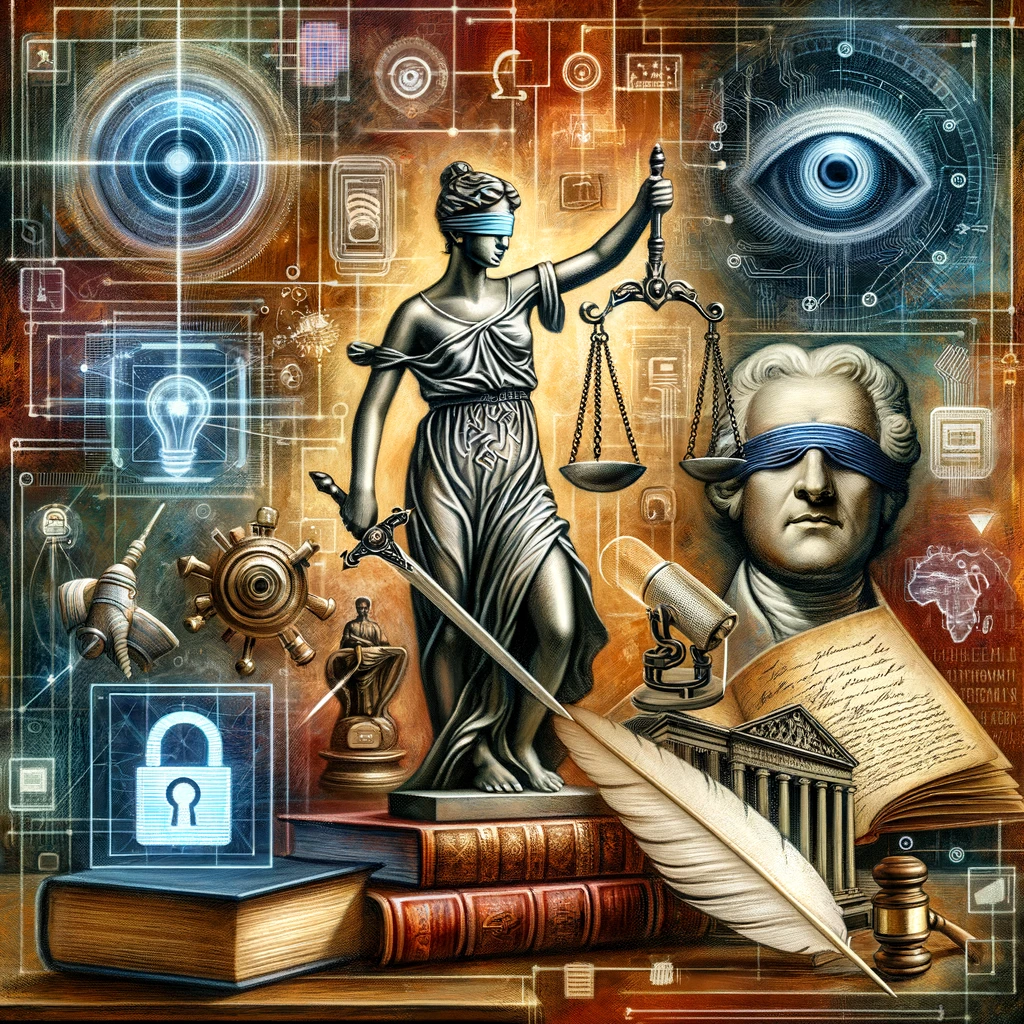
Navigating the Tech Revolution with a John Adams Ethos: Safeguarding Our Rights in an Era of Surveillance Author: Ken Cox Editor: Grok AI In the age of technological marvels, it’s vital we pause to reflect on the path we’re carving. AI can now detect a heart attack in your bedroom, a feat once thought impossible. However, this advancement brings privacy concerns and ethical dilemmas. Throughout history, we’ve seen examples of overreach in the name of safety and order. From prohibition to the outlawing of various substances and activities, the pendulum has swung between protection and personal freedom. In a society where ignorance of the law is no excuse, the rise of surveillance technology poses a significant threat to personal autonomy. The risk of these tools being misused, leading to corruption and division, cannot be understated. John Adams’ wise words, “It is more important that innocence be protected than it is that guilt be punished,” serve as a guiding light in this new technological landscape. His philosophy highlights the need for a balanced approach that values individual rights and freedoms, even in the face of groundbreaking advancements. As we continue to push the boundaries of what’s possible with technology, we must also champion the safeguarding of our rights. We need leaders and advocates in the mold of John Adams who will stand up for our liberties and ensure that the march of progress does not trample our fundamental freedoms. This call to action is about striking a balance between technological innovation and the preservation of individual freedoms. We may need to forego some conveniences until proper safeguards are in place. The trade-off is a society where technological benefits don’t come at the expense of our rights. Let’s prioritize the development of technologies that empower rather than control, that safeguard privacy while enhancing safety. Let’s advocate for laws and policies that protect the innocent and maintain the sanctity of our private lives. Our journey into the future should be paved with thoughtful consideration, where the preservation of individual freedoms is as paramount as the pursuit of innovation. In conclusion, the technology revolution must continue, but it must be coupled with a robust defense of our rights. We need more champions like John Adams, ensuring that our transition into this new era doesn’t sacrifice the freedoms we hold dear. The balance between innovation and rights is delicate, but it’s a balance we must strive to achieve. Let’s embrace this challenge and shape a future that honors both technological progress and the enduring values of liberty and privacy.
What Is Private Anymore? My Take on the Erosion of Privacy in a Tech-Driven World

What Is Private Anymore? My Take on the Erosion of Privacy in a Tech-Driven World Author: Ken Cox Editor: ChatGPT As I sat in my therapist’s office recently, surrounded by devices capable of data collection, a pressing question loomed in my mind: What is private anymore? Do we even have an expectation of privacy in spaces like a therapist’s office? My answer is a resounding yes. But in today’s world, this fundamental right is being eroded, subtly yet significantly. My life journey, marked by overcoming personal and professional challenges, has made me acutely aware of the value of privacy. From my youth in a low-income neighborhood to my battles with alcoholism, and my eventual triumph as a business leader and boxing enthusiast, every step has taught me the importance of safeguarding what is personal and private. These experiences have shaped my perspective on the sanctity of our personal spaces and information. In a society that values capitalism and freedom of choice, I stand strong in my belief that people need to be empowered with information they can understand before they can make reasonable choices. The complexity and inaccessibility of legal documents, the disregard for privacy by others, and the simple desire to use convenient services like GPS should not equate to a loss of our privacy rights. Yet, that seems to be the predicament we find ourselves in today. This is where the Privacy Policy Grading System (PPGS) comes into play. As the founder of PPGS, my aim is not just to critique the status quo but to offer a tangible solution. PPGS educates the public by summarizing privacy policies and presenting these summaries in a standardized, easy-to-understand format. It’s about bringing clarity to complexity, offering a beacon of understanding in a sea of convoluted legal jargon. My experiences, both in and out of the ring, have taught me the value of being informed and prepared. Just as a boxer studies their opponent and understands their tactics, users need to understand how their data is being used, stored, and potentially exploited. PPGS empowers users to make informed decisions about their digital interactions, reinstating a sense of control and choice. In today’s digital landscape, where devices and apps have become integral to our daily lives, the notion of privacy has become more complex than ever. It’s no longer just about what we choose to share publicly; it’s about the invisible trails of data we leave behind – data that paints a detailed picture of our lives, habits, and preferences. My call to action is simple yet profound: We must not passively accept the erosion of our privacy. We need to actively seek understanding and transparency. Tools like PPGS are a step in the right direction, but they are just the beginning. It’s time for a collective awakening to the importance of privacy in our digital age. As I share this message on social media and through my blog, I invite you to join me in this vital conversation. Let’s champion the cause of digital privacy, not just as a right but as a cornerstone of our freedom and dignity in the modern world.
Championing Conscious Capitalism in the Web 3.0 Era: A Call for Empowered Choice

Championing Conscious Capitalism in the Web 3.0 Era: A Call for Empowered Choice GET YOUR PPGS ID Author: Ken Cox Editor: Grok AI As we stand on the cusp of the Web 3.0 revolution, it is imperative that we, as a society and as business leaders, seize this moment to redefine the ethos of capitalism. Reflecting on America’s historical battles with bans on alcohol, pinball, and smoking in restaurants, we find a powerful narrative that echoes through the corridors of our digital future. Consider the smoking ban in restaurants. This regulation, albeit with positive health implications, was not just about smoke-free air. It was about choice, or more precisely, the loss of it. Major restaurant chains like McDonald’s and Applebee’s had already chosen smoke-free environments, yet thousands of smaller establishments were stripped of the ability to make their own decision. This raises a poignant question: Is the loss of choice a price we’re willing to pay, even for a greater good? As the President of Rivercity Internet Group LLC, I have always championed the freedom to choose, to innovate, and to differentiate. This belief is now more critical than ever in the era of Web 2.0 and the emerging Web 3.0. The digital age has brought with it an unprecedented collection and analysis of personal data, a reality that threatens to mirror the past – where choice is replaced by uniform mandates if we don’t act responsibly. The solution lies in informed self-regulation and the empowerment of users. The Privacy Policy Grading System (PPGS) is a beacon in this regard. Every digital entity that interacts with user data should adopt a PPGS ID, a clear, comprehensible summary of their privacy policies. This isn’t just a mere compliance badge; it’s a commitment to transparency, a declaration that we value our users’ right to understand and control how their data is used. This is about more than privacy; it’s about preserving the very essence of what makes capitalism vibrant and innovative. It’s about ensuring that the digital world is a place where choice and freedom aren’t just slogans but are ingrained in every interaction, every policy, every product. We are at a critical juncture. The choices we make today will define the digital landscape of tomorrow. Let’s not wait for government mandates to dictate the path forward. Let’s lead the charge, championing a digital ecosystem that is transparent, user-centric, and respects the fundamental right to choose. This is my passionate call to action – for businesses, tech leaders, and users alike. Embrace the PPGS. Champion informed choice. Let’s build a digital future that aligns with the values of conscious capitalism – a future where freedom, innovation, and user empowerment are not just upheld but celebrated.
Turning Corners: The Impact of Mentorship in a Troubled Youth

Turning Corners: The Impact of Mentorship in a Troubled Youth A few years ago, at a holiday party late at night, we ended up talking about all the things that adults like to talk about after a few cocktails. We were talking about growth, our kids, and how we’re going to change the world. For the first time in a long time, I felt helpless for ideas on how to make the world a better place. This made me sad, but I brushed it off because we were all having a great time, just talking and stuff. As the party wound down and it was just a couple of closer friends, we ended up talking about my real-life experiences and how they shaped me into the person I am today. I started reminiscing about my childhood. Generally, when I think about my childhood, it’s never with a positive outlook. I grew up in a town called Lower Arnold with three stepbrothers, a stepsister, a drunk, abusive stepfather, and a mother who suffered from PTSD and had her own addiction issues but always showed me love. So, I was surprised when I started reminiscing about my childhood and my jobs and how much of a smile it put on my face. See, I didn’t have many role models growing up who would show me how to do anything other than factory work or be a criminal. I’ve had lots of mentors in my life, and I’m going to focus on four of them specifically now, starting as early as when I was 9 years old. Don, the slot car track owner. In Lower Arnold in 1983 or 1984, it was a fun place to grow up and learn a lot about life at an early age. You have to remember, this was a different time, and it seems like a different universe today. My dad, or rather, my stepdad Ron, figured out that he could get me to run almost any errand he wanted in exchange for a couple sips of beer and a couple of missing cigarettes from his pack. When I got home, it wasn’t uncommon for Ron to send me to the gas station on my pedal bike to pick him up cigarettes or a six-pack of beer. I would always get to keep the change, which meant that for a 9-year-old, I definitely had a little more pocket cash than most kids my age. I would also clean up the kitchen floor in the morning for lost quarters, nickels, and dimes from the poker game that my parents had the night before. One day, on my way to Magic Market, a little store up the road from our house to get my dad some cigarettes, I looked across the street and next to the Spandisco, a little gentleman’s club across the street from my house, and saw a slot car track. I had no idea what a slot car track was, but I knew I needed to figure it out. So, I rode my bike across the street and walked into this really small little storefront, looking back now, maybe 500 sq ft. There was nobody in there but an old guy with ratty, white hair, working on what I later found out was a slot car chassis. You could smell the flux in the air from the soldering irons. It was hot, with no air conditioning, and it smelled like burnt electronics as soon as I walked in. I asked him how I could get into this. He said, “Do you have $8 to buy yourself a car?” I said I did. He took my $8 and gave me a used slot car, put it on the track, and gave me like 10 or 15 minutes of track time that day, and I was instantly in love. At the time, I had no idea what Don was doing for me, and I don’t think he had any clue about the impact he would have on me long term. Don was the first adult that treated me with any kind of respect. We became friends. I would go to the slot car track as often as I could. I would hustle money to rent track time, and when I didn’t have money for track time, I would fix people’s cars inside the shop for cash to buy more track time. I would compete and place bets to earn more money, car against car. Anything that I could do to get better, faster cars and spend more time in the slot car track and less time at home. I remember many fights with my parents about them not supporting me financially in my hobbies. I was always so frustrated with them because they would tell me to find stuff to do, but they would never help me figure out how to get the money to do the things I wanted to do. I suppose I should thank them now for that. I spent the next couple of years in this slot car track room, racing, learning how to solder, learning the basics of electricity and electronics, and learning a lot in that little room. I think this is where I also learned how to be comfortable in uncomfortable positions. See, I’m not even 10 years old, and I’m going to the slot car track, clearly the youngest boy there by far, stuck between a strip club and a tattoo parlor. I learned a lot in the slot car track from Don and learned a lot more on the front sidewalk from the patrons of the other establishments, again, not great role models. Over the years, the slot car track didn’t make enough money. It was clear Don was running the business because he loved it, but he thought he’d be able to help kids in a screwed-up neighborhood. It just wasn’t a great business model, but I think it’s a testament to the
Lessons from Pinball’s Hidden History: Preserving Our Digital Rights

Preserving Our Digital Rights: Lessons from Pinball’s Hidden History Author: Ken Cox Editor: Grok, xAI’s AI The history of pinball, a game that once had to skulk in the shadows of American society, holds a mirror to the current state of digital privacy. In the mid-20th century, pinball enthusiasts were forced to hide their beloved machines, as governments seized and destroyed them, citing moral and societal concerns. This was more than just a crackdown on a leisure activity; it was a violation of the fundamental right to pursue happiness. Today, as we navigate the complex digital landscape, we face a similar predicament with our privacy rights. The ease with which we relinquish our digital privacy, often unknowingly, mirrors the passive acceptance of pinball’s outlawing decades ago. If we are not vigilant, we risk a future where our right to privacy is as compromised as the right to enjoy a simple game of pinball once was. Pinball’s journey from vilification to vindication is a powerful reminder. Enthusiasts and creators of the game had to operate in secrecy, their passion considered illicit. It’s a stark illustration of how quickly rights can be eroded under the guise of societal good. Similarly, our digital privacy is currently dangling on the edge of a precipice. Without a firm stand for our privacy rights, we might find ourselves in a world where our online activities, personal data, and even our digital thoughts are no longer our own. The parallel is clear: just as pinball lovers fought for their right to enjoy their game, we must fight for our digital rights. Initiatives like PPGS (Privacy Policy Grading System), found at PPGS.global, are steps in the right direction. By grading privacy policies for clarity and respect for user data, PPGS empowers users to make informed decisions, much like the pinball community’s efforts to showcase the skill-based nature of their game. As President of Rivercity Internet Group LLC, I see a dual approach as essential. Firstly, we must advocate for and foster digital literacy and transparency in tech industries. Systems like PPGS are invaluable in this endeavor. Secondly, it is imperative that we reshape our societal attitude towards digital privacy. Just as the view on pinball evolved, so must our approach to privacy. It is not just a convenience but a fundamental right, integral to our dignity and autonomy in the digital age. In conclusion, the past persecution of pinball lovers is a cautionary tale for our current digital landscape. As we embrace the benefits of the internet, we must guard against the complacency that could strip away our privacy rights. Our actions today will determine whether our digital future reflects the freedom pinball enthusiasts once fought for or the oppression they endured.
The Power of Clarity: Why Signage Matters in Business and Privacy

The Power of Clarity: Why Signage Matters in Business and Privacy By Ken Cox, Founder of PPGS Global Dear friends, colleagues, and fellow travelers on the road of life, In the bustling streets of commerce, signs do more than just show the way; they tell a story. Take, for instance, the iconic “Hot Doughnuts Now” sign of Krispy Kreme. This isn’t just a sign; it’s a beacon of warmth and temptation, instantly communicating both availability and allure. Yet, the power of signage extends far beyond the realms of commerce, into the very fabric of our daily lives. Think of the stark, life-saving messages such as “No Lifeguard on Duty” or the cautionary “Sharp Turn Ahead” signs. They are silent guardians, guiding us through potential perils. This profound impact of signage, both in its allure and warning, is what inspired the creation of the Privacy Policy Grading System (PPGS) at ppgs.global. In the digital world, akin to the physical one, dangers lurk – often in the form of obscured or misunderstood privacy policies. Consider a future scenario: A grandmother, unfamiliar with the digital landscape, gifts her granddaughter a digital diary. Hidden within its fine print, a privacy policy states that the manufacturer has rights over any data entered. Fast forward three decades, and this innocent data becomes a political bargaining chip as the granddaughter runs for Congress. PPGS aims to introduce a simple, universally understandable symbol to signify the privacy risks of digital products. This symbol serves as a digital signage system, guiding consumers to make informed decisions about their data privacy, much like traffic signs direct drivers. The need for such clarity in the digital realm is not just a convenience; it’s a necessity. In a world where data is often traded without consent, a clear choice is often lacking. Current practices assume consent, largely due to complex privacy policies that are hard to understand, let alone find. Additionally, in a hypothetical world where a tyrannical government could exploit personal beliefs, the value of privacy escalates. The ability to keep one’s religious beliefs private, especially in contrast to a regime’s doctrines, is a crucial liberty that must be safeguarded. In conclusion, as signs guide and protect us in the physical world, so too must we establish clear, comprehensible signage in the digital landscape. PPGS is not just a tool; it’s a commitment to a future where digital choices are as informed and protected as our real-world decisions. By empowering people with clear information, we enable them to choose privacy. It is not just about providing a choice but about ensuring that the choice is clear and accessible. PPGS represents a step towards a future where our digital interactions are as safe and transparent as our physical ones. By embracing the power of signs in both the physical and digital realms, we can ensure that our journey through life is one of informed choices and protected privacy. Warmest regards, Ken Cox .
A Journey of Triumph: How Entrepreneurship Transformed My Life
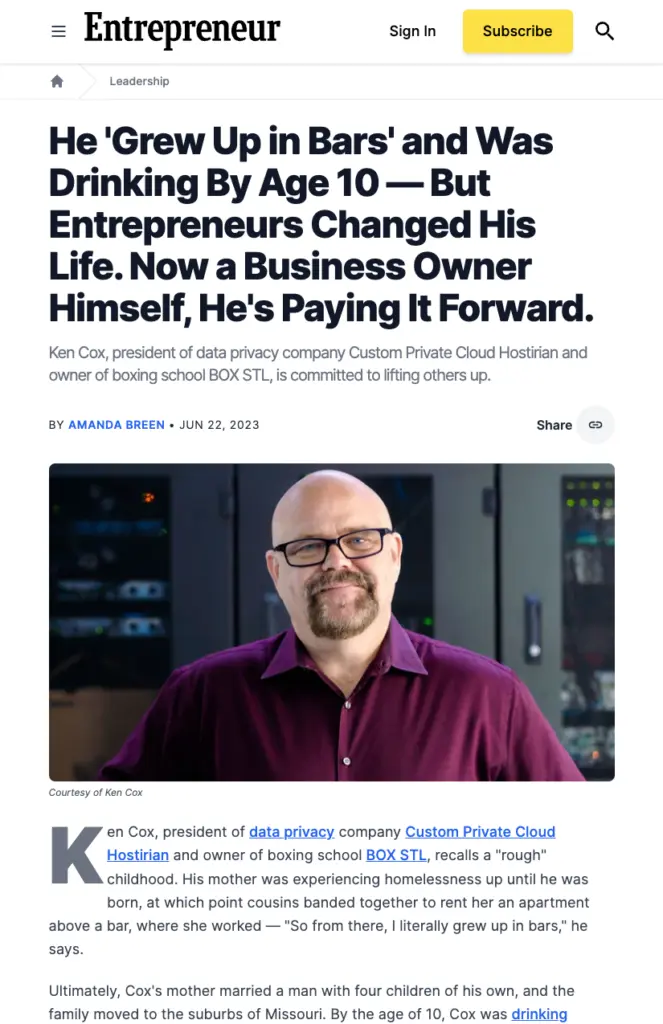
A Journey of Triumph: How Entrepreneurship Transformed My Life Dear friends, colleagues, and fellow entrepreneurs, Today, I am honored to share with you a deeply personal story of how entrepreneurship changed my life for the better. Recently, I was featured in an article on Entrepreneur, where I had the opportunity to discuss the incredible impact entrepreneurship has had on me. Growing up, my childhood was far from easy. I faced numerous challenges, but it was these very obstacles that ultimately led me to discover the power of entrepreneurship. As I navigated the world of business, I found a sense of purpose and direction that I had never experienced before. Through the trials and tribulations of building my own business, I discovered the true meaning of resilience, determination, and the importance of never giving up on your dreams. It was through this journey that I was able to overcome my personal struggles and find a renewed sense of self. Entrepreneurship has not only transformed my life, but it has also given me the opportunity to make a positive impact on the world around me. It is a privilege to be able to share my story with others and to inspire them to pursue their own dreams and ambitions. As I reflect on my journey, I am filled with gratitude for the incredible people who have supported me along the way. To my family, friends, and colleagues, I extend my heartfelt appreciation for your unwavering belief in me and our shared vision. Without your encouragement and support, none of this would have been possible. To those who are considering embarking on their own entrepreneurial journey, I encourage you to take that leap of faith. The road ahead may be challenging, but the rewards are immeasurable. Believe in yourself and your ability to overcome any obstacle that comes your way. Once again, I would like to express my gratitude to Entrepreneur for featuring my story and for providing a platform for me to share my journey with others. It is an honor to be recognized by such a prestigious publication, and I am deeply grateful for the opportunity to share my story with a wider audience. In closing, I would like to leave you with a quote from the great entrepreneur and inventor, Thomas Edison: “Many of life’s failures are people who did not realize how close they were to success when they gave up.” Keep pushing forward, and never lose sight of your dreams. https://www.entrepreneur.com/leadership/entrepreneurs-changed-his-life-now-hes-paying-it/454478 Link to the article. Warmest regards, Ken Cox
AMAZON PPGS

© All rights reserved Twitter Facebook Dribbble Youtube Pinterest Medium LEARN HOW THE PPGS GRADES PRIVACY POLICIES? Privacy Policy Review: By Ken Cox on 4-13-2023 using the PPGS 2.1 Transparency (Clear and Complete): B (Green) The Amazon.com privacy policy provides a good level of detail regarding the types of personal data collected and why it’s collected. However, some of the language used in the policy may be technical and difficult for some users to understand. User Control (Access, Deletion, and Changes): B (Green) Amazon.com allows users to access, modify, or delete their personal information through their account settings. While the process for making these changes may not be immediately obvious to all users, the options are available and relatively easy to use. Third-party Sharing (Limits and Consent): C (Yellow) The Amazon.com privacy policy is less clear on when and how user data is shared with advertisers and other third parties. While users may be able to limit or opt-out of some data sharing, it’s not always clear when and how this is possible. Security Measures: A (Blue) Amazon has implemented strong security measures to protect user data from unauthorized access or disclosure. The privacy policy explains these measures in detail, which is a positive sign. Notification of Changes: A (Blue) The Amazon.com privacy policy explains how users will be notified about significant changes to the privacy policy, which is a good thing. Users will be notified via email or through the website if there are any significant changes made to the privacy practices. Readability: B (Green) While the Amazon.com privacy policy is generally well-written and easy to understand, there are some sections that may be more difficult for the average user to comprehend. The language used in the policy may be technical or legalistic, which could make it difficult for some users to understand. Business Risks: Data Breaches and Security Incidents: As a privacy expert, Ken Cox would likely acknowledge that all companies that collect and store user data are at risk of data breaches and other security incidents. While Amazon.com has implemented strong security measures to protect user data, there is always a risk that a breach or incident could occur. This could result in sensitive user data being exposed or stolen, which could lead to financial loss or identity theft. Targeted Advertising and Data Sharing: Ken Cox would likely note that targeted advertising and data sharing are potential risks associated with the Amazon.com privacy policy. While users can limit or opt-out of some of this data sharing, it’s not always clear when and how user data is shared with advertisers. This could result in users being served ads that are not relevant to their interests or having their personal information shared with third parties without their knowledge or consent. Employee Access and Third-Party Service Providers: Ken Cox would likely recognize the risk that Amazon.com employees or third-party service providers could access or use user data improperly. While Amazon has policies and procedures in place to prevent this from happening, it is still a risk that users should be aware of. Additionally, third-party service providers may have their own security vulnerabilities or data privacy issues, which could result in user data being exposed or compromised. In summary, I give the Amazon.com privacy policy a B (Green) based on the PPGS 2.1. While the policy provides a good level of detail and offers users some control over their personal information, there are areas where it could be more transparent and user-friendly. In terms of business risks, Ken Cox would likely note that data breaches and security incidents, targeted advertising and data sharing, and employee access and third-party service providers are all potential risks that users should be aware of when sharing private data with Amazon.com. Amazon.com Privacy Notice Get In touch (314)-216-7126 available from 10:00 – 19:00 Address 11756 Borman DrSt. Louis, MO 63146 Email [email protected]
GOOGLE PPGS

LEARN HOW THE PPGS GRADES PRIVACY POLICIES? Privacy Policy Review: By Ken Cox Transparency (Clear and Complete): A (Blue) The Google.com privacy policy is very transparent, providing a clear and complete explanation of the types of personal data collected and how it’s used. The policy is written in plain language that’s easy to understand for most users. User Control (Access, Deletion, and Changes): A (Blue) Google allows users to access, modify, or delete their personal information through their account settings. Users can also choose to limit or opt-out of certain data collection and sharing, such as location data or personalized ads. The options for controlling personal data are clearly presented and easy to use. Third-party Sharing (Limits and Consent): B (Green) The Google.com privacy policy explains when personal data may be shared with third parties and why. The policy also provides users with some control over this data sharing, such as the ability to limit or opt-out of sharing for certain types of data. Security Measures: A (Blue) Google has implemented strong security measures to protect user data from unauthorized access or disclosure. The policy explains these measures in detail, including the use of encryption, secure data storage, and regular security audits. Notification of Changes: A (Blue) The Google.com privacy policy explains how users will be notified about significant changes to the policy. Users will be notified via email or through the website if there are any significant changes made to the privacy practices. Readability: A (Blue) The Google.com privacy policy is very well-written and easy to understand. The language used in the policy is clear and straightforward, making it accessible to most users. Business Risks: Data Breaches and Security Incidents: Like all companies that collect and store user data, Google.com is at risk of data breaches and other security incidents. However, Google has implemented strong security measures to protect user data and regularly conducts security audits to ensure compliance with security standards. While there is always a risk of a security incident, it appears that Google is taking the necessary precautions to minimize this risk. Targeted Advertising and Data Sharing: Google engages in targeted advertising and may share user data with third-party advertisers in some instances. However, users have the ability to limit or opt-out of personalized ads and data sharing for certain types of data. Additionally, Google is transparent about when and why user data is shared with third parties, which is a positive sign. Employee Access and Third-Party Service Providers: There is always a risk that Google employees or third-party service providers could access or use user data improperly. However, Google has policies and procedures in place to prevent this from happening, including strict access controls and regular employee training on data privacy and security best practices. In summary, based on the PPGS 2.1, the Google.com privacy policy receives high marks, with an overall grade of A (Blue). The policy is transparent, user-friendly, and provides users with significant control over their personal data. While there are still some business risks associated with sharing private data with Google.com, it appears that the company is taking the necessary precautions to minimize these risks. View Gooles Privacy policy and judge for yourself Get In touch (314)-216-7126 available from 10:00 – 19:00 Address 11756 Borman DrSt. Louis, MO 63146 Email [email protected]